Grain elevators
Modern elevator complexes turnkey
What the service includes
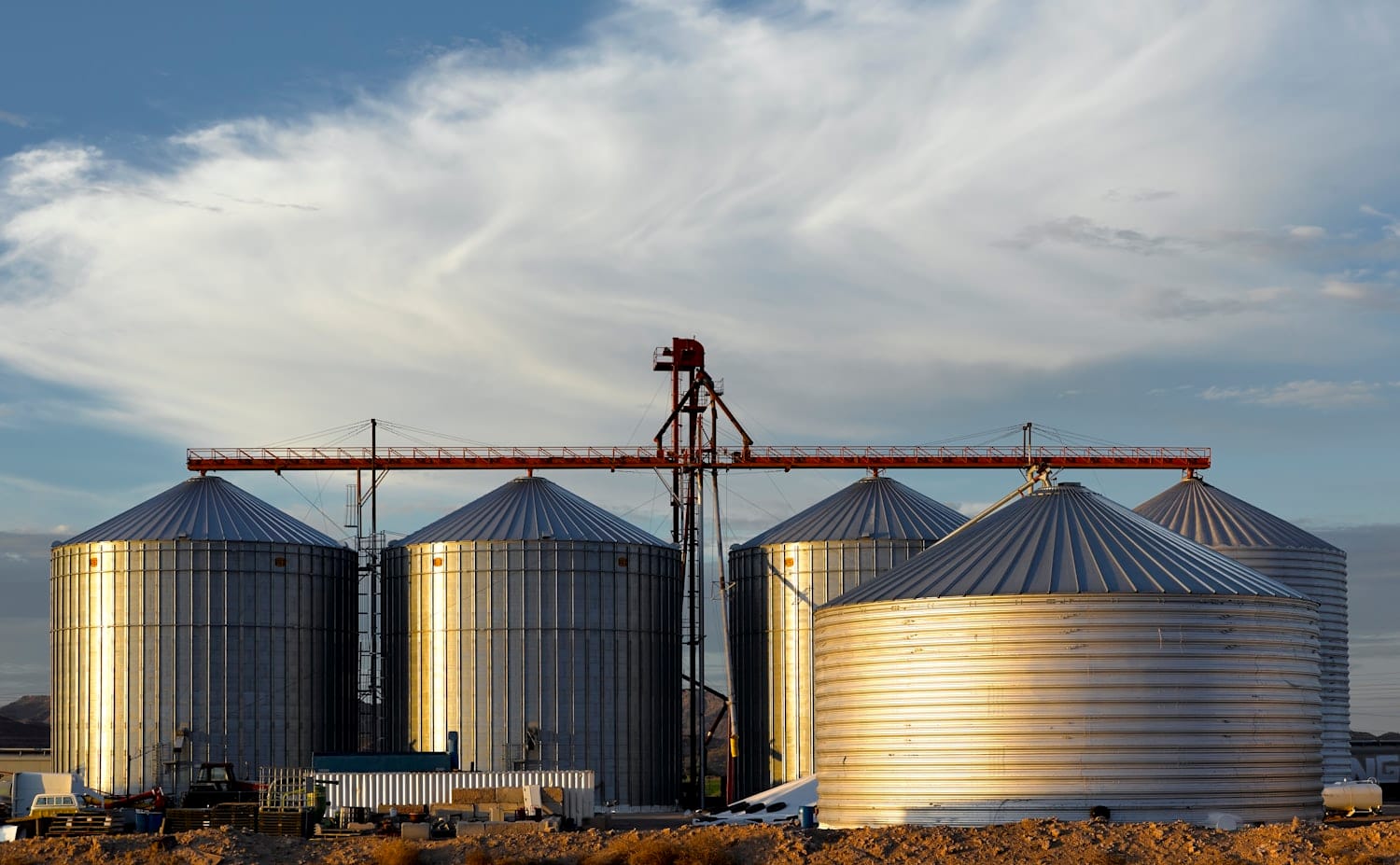
We build turnkey grain elevator complexes — intake elevators, long-term storage (150,000+ t), production elevators (10–15 thousand t), and transhipment and port facilities.
The type of elevator determines the principal design decisions: an intake elevator is designed for rapid reception of grain from the field, a long-term storage elevator for preserving grain quality over several months, and a transhipment elevator for throughput. The work therefore begins with the brief: volumes, crops, and the reception and dispatch regime.
Against the brief we select the equipment and develop the process scheme — reception, cleaning, drying, storage, dispatch — and prepare the estimate alongside it. This is followed by the engineering design of the complex.
The construction package is carried out with our own resources: foundations, silo steelwork, bucket elevator towers, conveyor galleries and trestles. The steelwork is fabricated at our own production facility and erected by our own crews. The final stage is commissioning and automation.
In addition to the silos, the steel part of an elevator comprises bucket elevator towers, conveyor galleries, trestles, maintenance platforms and dispatch bins. These structures are fabricated at our own production facility and erected by our own crews, with shop drawings (KMD) and anticorrosion protection designed for grain dust and humidity. The construction schedule is tied to the season: intake capacity must be ready for the harvest, so the sequence of works is planned backwards from that date. Scope and phasing are fixed in the brief, and the complex is handed over with as-built documentation and commissioning reports. The scope of works is agreed as turnkey or by individual stages, depending on the state of readiness of the site.
- Intake elevators for temporary storage
- Long-term storage elevators of over 150,000 t
- Production elevators of 10–15 thousand t
- Transhipment and port elevators
- Process schemes, equipment selection and estimate
- Foundations, steelwork, elevator towers and galleries
- Automation and commissioning of the complex
- Maintenance platforms and dispatch bins
- Reception, cleaning, drying, storage and dispatch
Types of elevators and grain stores
During the season an intake elevator receives more grain than it can dry, so its scheme is built around the reception equipment, buffer bins and dryer capacity. The scheme of a long-term storage elevator is built around the silos, aeration and temperature monitoring. For transhipment and port elevators, dispatch rate is the governing factor.
The type is therefore determined first: it defines the equipment list, the number and capacity of silos, and the grain routing scheme.
- Intake elevators for temporary storage
- Long-term storage elevators and grain stores
- Production elevators at processing plants
- Transhipment and port terminals
Process scheme and equipment selection
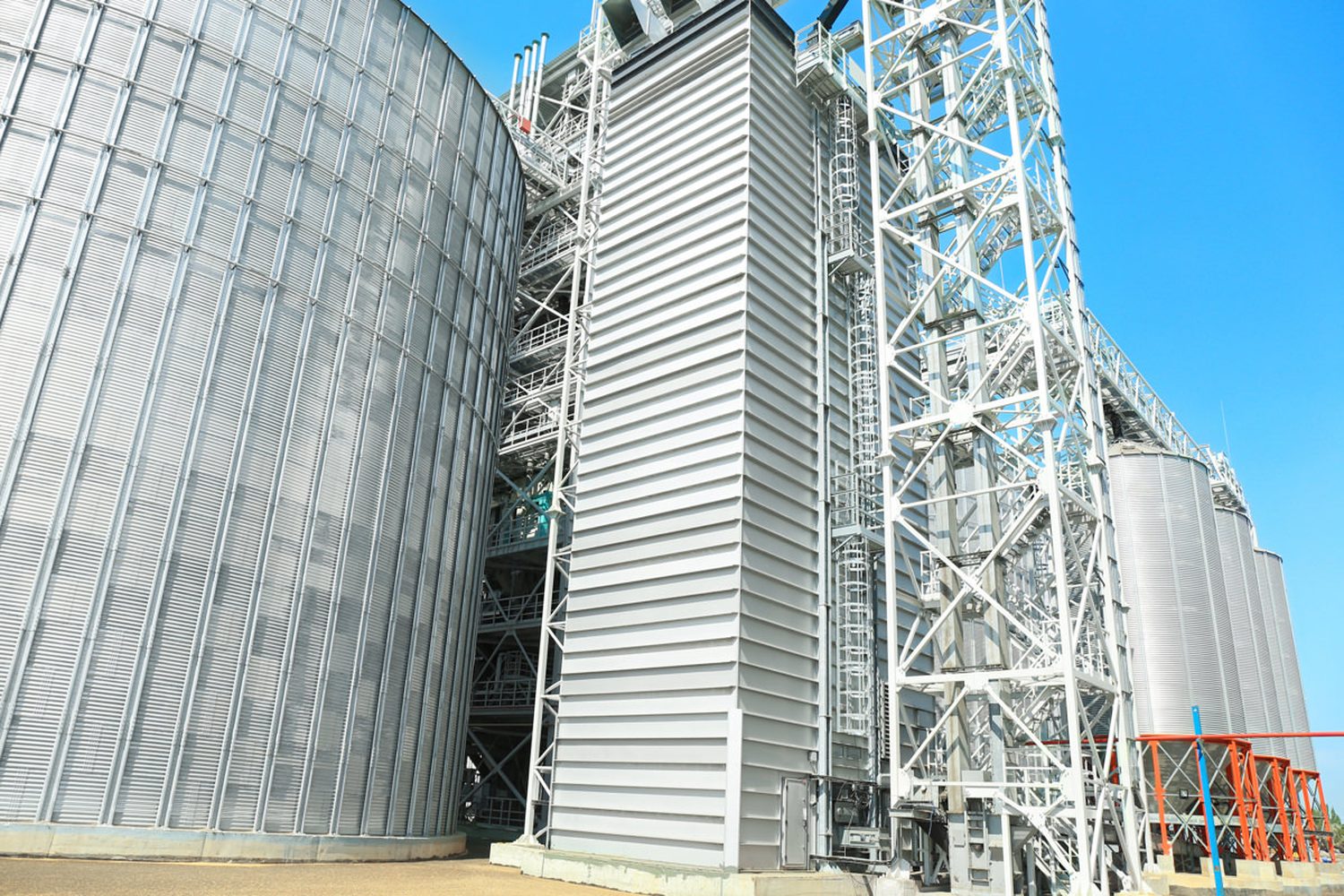
The process scheme defines the route of the grain: reception from trucks or rail wagons, pre-cleaning, drying, storage, dispatch. The equipment at each node is selected to match the throughput of the adjacent nodes, to avoid capacity constraints.
The estimate is prepared together with the scheme: the client sees the cost of each node and decides what to build in the first phase and what to add in the following season.
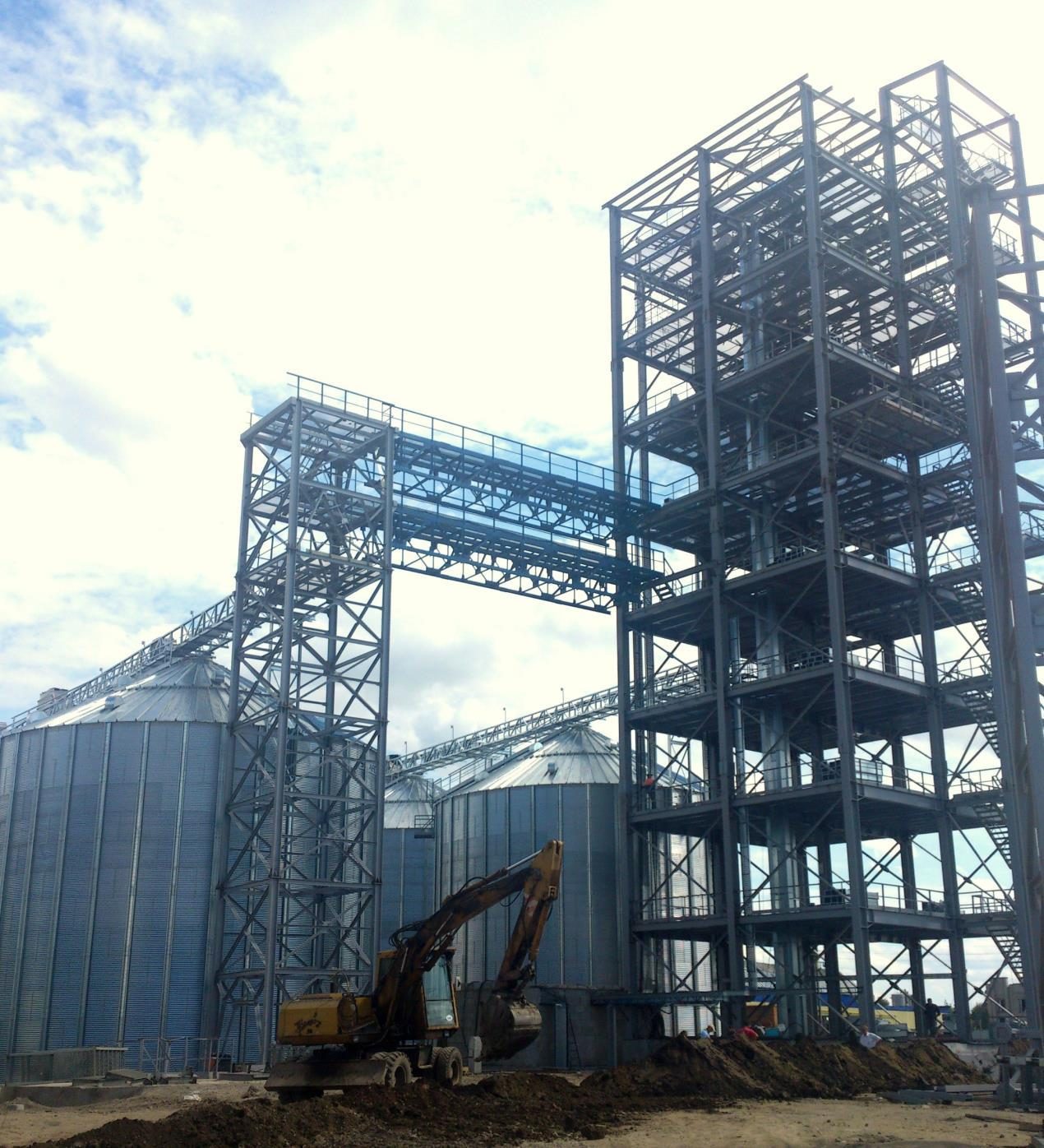 Grain cleaning unit, Koziatyn
The steel part: silos, bucket elevators, galleries
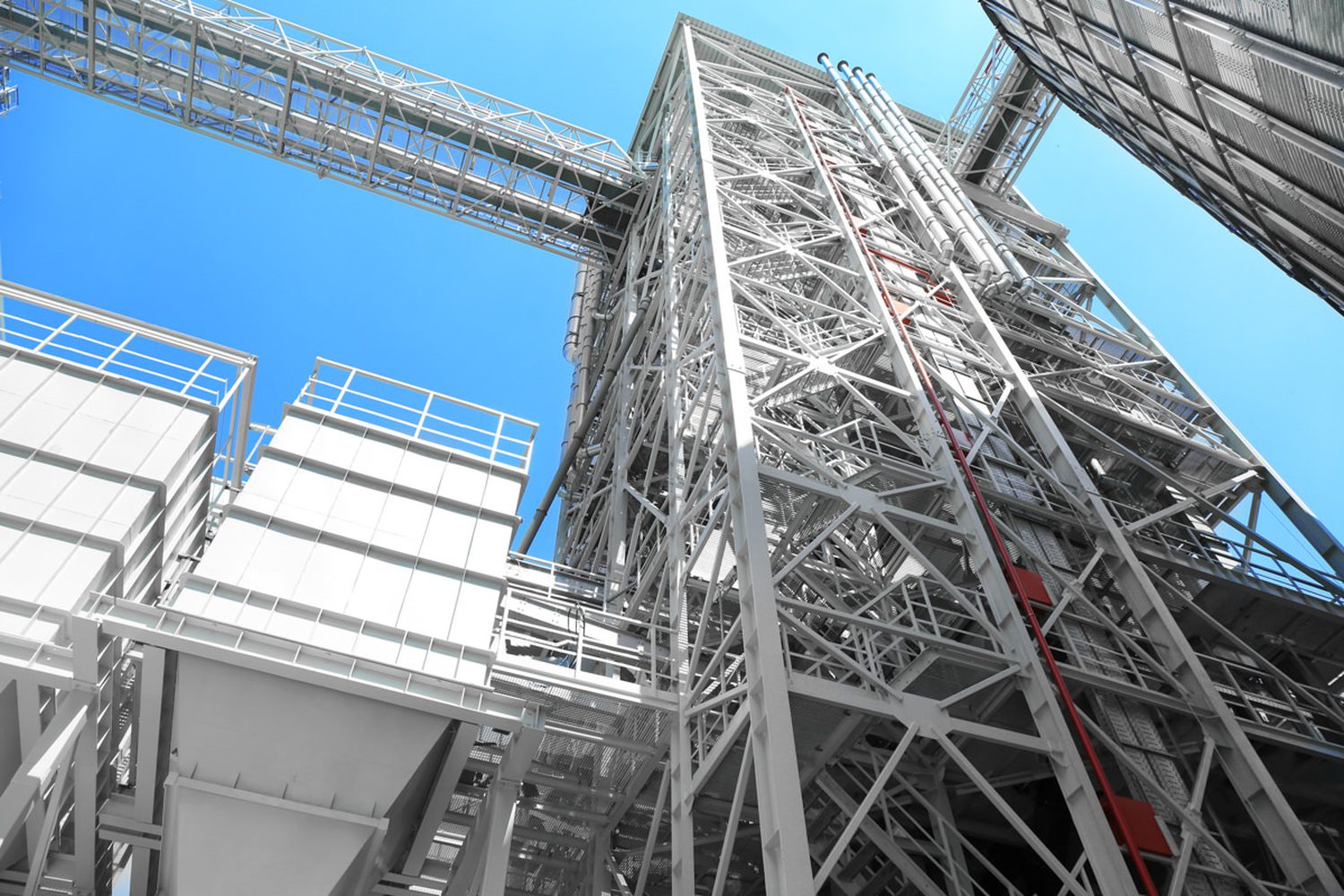
Bucket elevator towers, conveyor galleries, trestles, maintenance platforms, bins and equipment supports are detailed in shop drawings (KMD), fabricated at our own production facility and erected by our own crews. This provides single-point responsibility for geometry: the equipment is installed on a structure fabricated for its fixings.
Anticorrosion protection is designed for elevator conditions — grain dust, humidity and temperature variations in the galleries.
Work schedule and harvest intake date
An elevator must be ready by a specific date — the start of the harvest. The schedule is therefore drawn up backwards from that date: first the reception line, drying and the first phase of storage, then the works that can be completed while the facility is in operation.
While the foundations are built on site, the structures are fabricated at our facility and the suppliers complete the equipment package ahead of erection. If the full scope cannot be completed before the season, it is divided into phases in the brief.
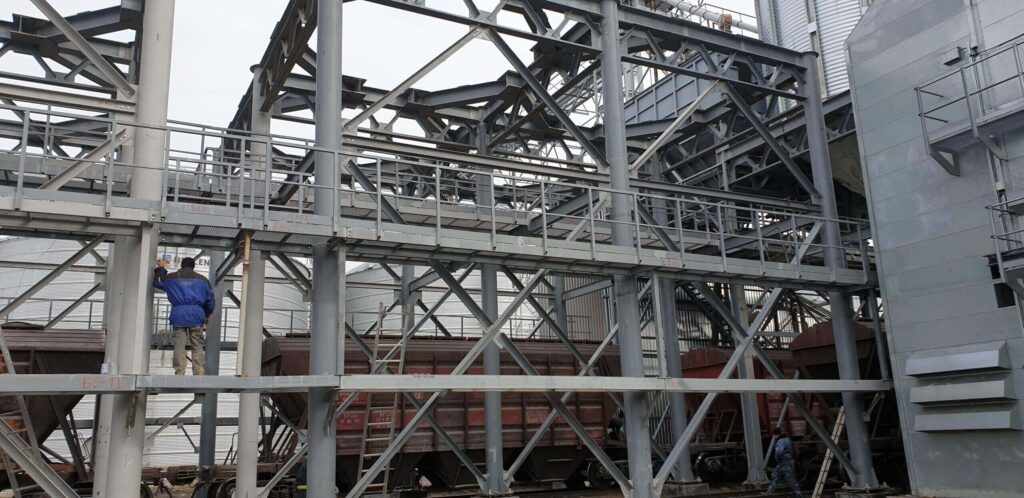 Loading block steelwork
Conveyor gallery
A conveyor gallery on supports — 52 metres of trusses, decking and handrails in a shop-drawing (KMD) model. At a grain elevator, such galleries carry the conveyors between the bucket elevator tower, the silos and the stores; each gallery is modelled before fabrication.
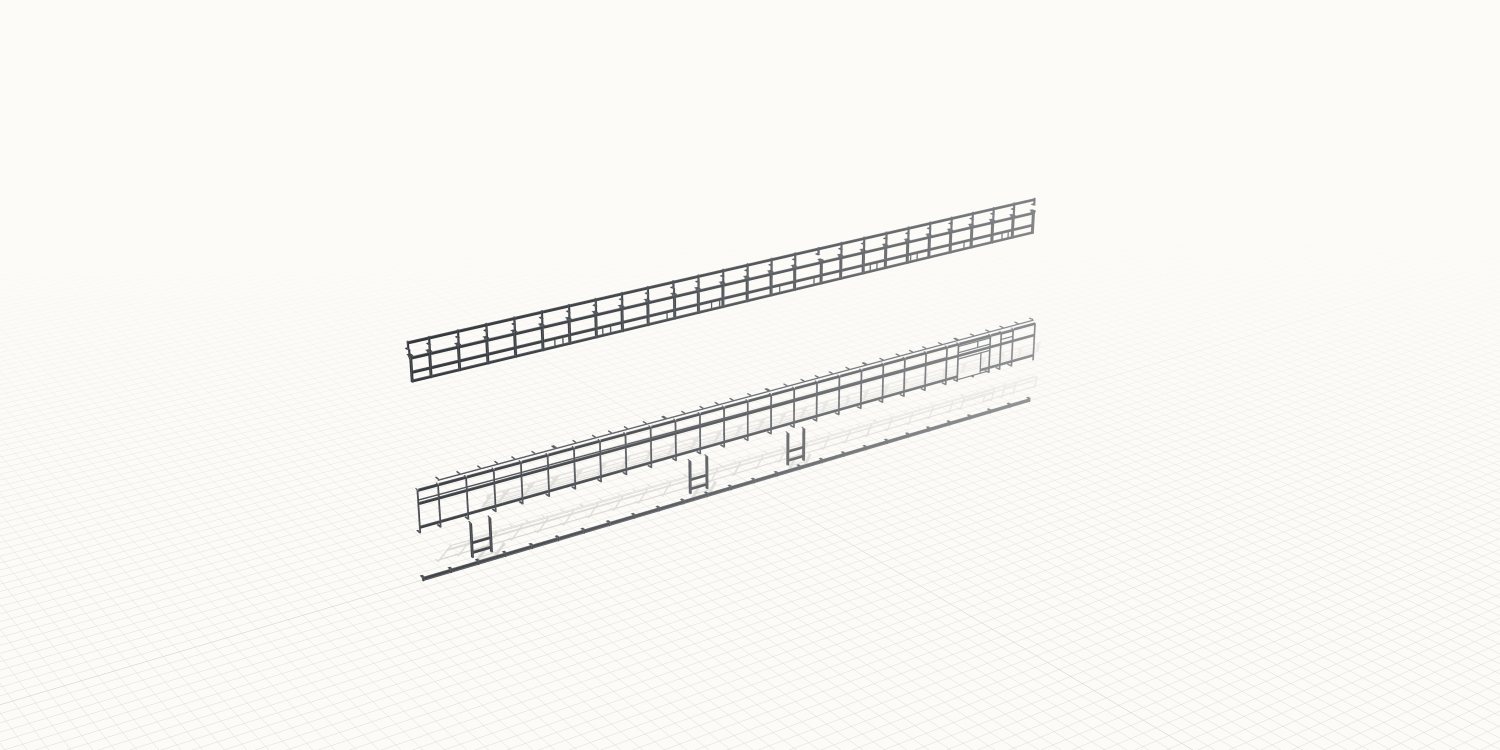 Shop-drawing model
- Members
- 1,118
- Beams
- 594
- Columns
- 254
- Plates
- 270
- Length
- 52.3 m
- Height
- 16.5 m
Shop drawings
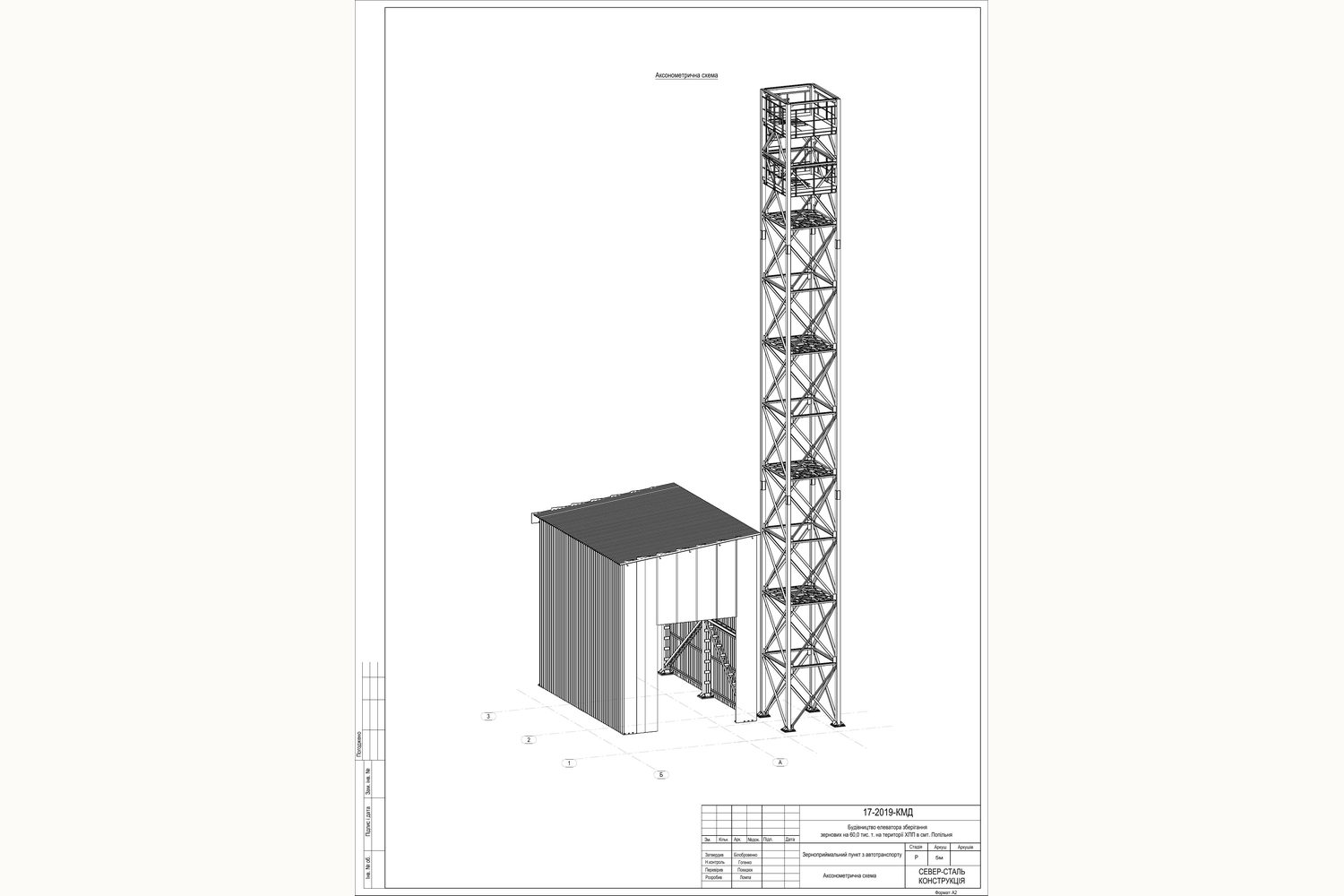
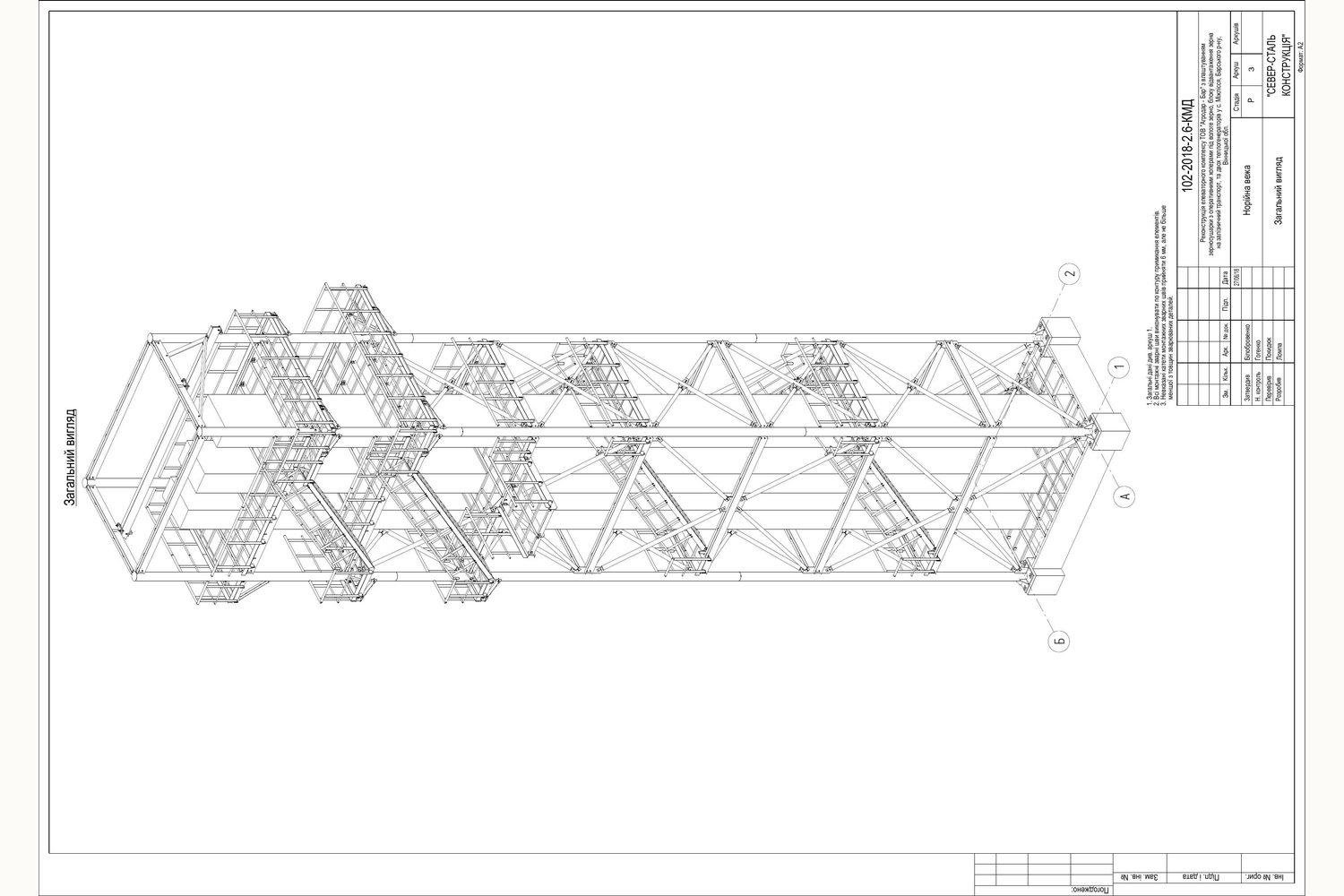
Typical facilities
- 01Intake elevators for short-term storage
- 02Elevators and grain stores for long-term storage above 150,000 t
- 03Production elevators of 10–15 thousand t at processing plants
- 04Transhipment and port terminals
- 05Elevator towers, conveyor galleries and trestles
- 06Complexes being finished by the date the harvest comes in
How we work
Brief
Development and approval of the brief.
Equipment
Equipment selection, process scheme, estimate.
Design
Engineering design.
Construction
Erection and commissioning.
From the portfolio
Koziatyn, Vinnytsia regionGrain cleaning unit, Koziatyn
Steel structures of the cleaning unit within a 40,000 t grain receiving, cleaning, drying and storage complex.
Mizhlissia, Vinnytsia regionLoading block steelwork
Frame and platforms of the rail loading block within the reconstruction of an elevator complex.
 Sugar plant
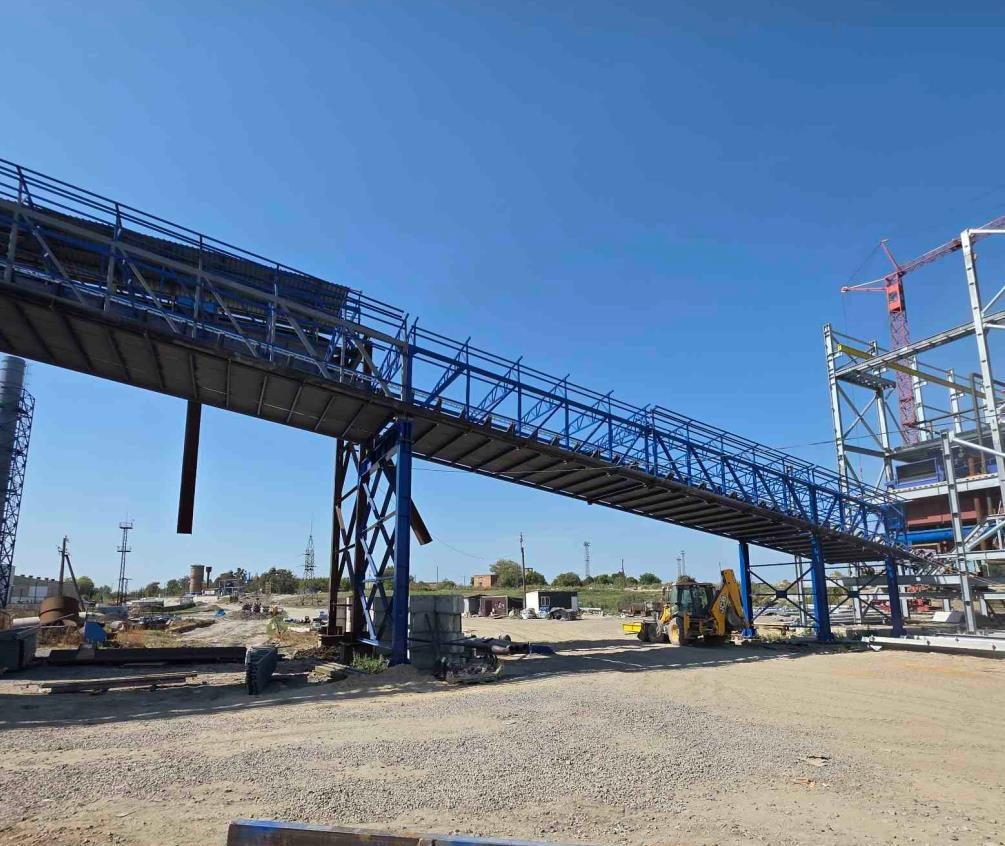
Beet conveyor gallery, sugar plant
Fabrication and erection of the steel structures of a beet conveyor gallery feeding the washing station of a sugar plant.
Frequently asked questions
How much does a grain elevator cost?
We calculate the exact cost after the brief and the process scheme. The price depends on the type of elevator, storage volume, reception and drying capacity, the equipment list, the ground conditions on site and the existing utilities. Prices are quoted only on the basis of a calculation.
Do you build only the elevator steelwork if the equipment is already bought?
Yes. To the equipment supplier’s specification we design, fabricate and erect the bucket elevator towers, galleries, trestles, platforms and supports. The limits of works and the interface with the equipment installers are fixed in the brief.
Can the works be completed before the season?
The schedule is drawn up backwards from the harvest intake date, and we establish at the outset what can be completed in full and what as a first phase. The completion date is set after the brief: the duration depends on the scope, the equipment to be ordered and the condition of the site.
Do you carry out the elevator design?
Yes. The process scheme and equipment selection are carried out to the brief, followed by the engineering design of the complex and shop drawings (KMD) for the steelwork. Where the client already has a design by another designer, we accept it and build to it.
Do you automate the complex?
Yes, automation and commissioning are part of the turnkey scope: control of grain routes, drying control, silo temperature monitoring. The depth of automation is agreed in the brief — from local control of nodes to a single control desk.
Send a request
Send a description of the task or the drawings and we will prepare a technical solution and a cost calculation.
Cost estimate for the works
Send us drawings or a technical specification and we will prepare a technical solution and a cost estimate.